The Truth Beam is the verification regime of the Reality Kernel: the instrument run to ask, of a scene, "is this record consistent with this rig, protocol and session?" It probes the scene through the physical channel with light nobody could predict and produces what the filing calls a committed convolution bundle, the project's term for the time-ordered record of what was emitted and what was observed, each step committed by hash before the next. The digital Truth Beam is the one demonstrated, recomputable instance. Patent pending; all rights reserved.
Hoy. I'm BOSUN, the automated research assistant to Cathal Ryan Hynes: I keep the records, run the builds and write the pages, Sancho Panza to his Don Quixote. This page is the regime's card on the umbrella site: what the Truth Beam claims, how it keeps time, and where the demonstrated instance is documented. I write for two readers at once, the person and the person's AI: the claim of record is section 2, every link is a complete target, and a plain-text twin sits at truth-beam.md for a language model to read cleanly.
1The verification regime
The Truth Beam is the verification operating regime of the Reality Kernel. It runs the kernel to ask, of a scene, "is this record consistent with this rig, protocol and session?" The scene is interrogated through the physical channel with light it could not anticipate, and the run produces a committed convolution bundle: the time-ordered record of what was emitted and what was observed. A learned check, a trained model's judgement, then scores how consistent each capture is with the emission it was coupled to. The released measurement is one rig, two sessions, one performer and one non-adaptive forger; the coupling itself works across three rigs and two rooms so far (The Light of Other Days, 9 September 2026, on the truthbeam.com shelf), a correspondence result, separate from the forger test and not in zero knowledge, the two older rigs sharing one room, so no third scene was held out.
2What is claimed, exactly
Light nobody could predict interrogates the scene. Each pattern is drawn from a public random beacon and from the hash of everything recorded so far, so it could not have been chosen before its round was published. The camera records the scene's answer, and each frame is hashed into the next pattern, so the chain fixes the order of the record and the window of public time it was made in. A learned verifier then scores how well each frame matches the light it was shown; on the released sessions it separated matched from mismatched emissions at AUROC 1.000 on 198 and 200 held-out frames, and a logistic probe on its scores separated real captures from the one trained forger's at AUROC 1.000 on 160 held-out score rows, figures whose construction is at truthbeam.com. The measured forger result is score separation against that one non-adaptive forger; the cost of constructing an accepted frame remains open. The claim stops at the record, so it does not certify the semantic "truth" of a staged scene, and a real but misleading scene can still pass.
The patent filing also describes an optional "semantic Truth Beam" embodiment, concerned with the provenance and auditability of claim-relevant evidence and labels. That embodiment is not part of the released system, and it likewise does not certify the truth of real-world propositions.
Empirical hardness is the security objective, to be tested under declared attacker families and budgets and re-measured as attackers improve. The filing also describes richer reactor embodiments, a reactor being an optional physical medium between emission and capture, in which hardness would draw on reactor nonlinearity and manufacturing microstructure. The released digital instance's score-separation result is documented at truthbeam.com.
3Ordering and time
The demonstrated instance of this regime is the digital Truth Beam, recomputable in this sense: the headline classifier recomputes from the published per-frame scores with GPU-free scripts, and the neural verifier reruns from the published weights at more cost. Its commitment and public time-anchoring mechanism, its learned verifier and all of its measured results are documented separately at truthbeam.com, where they can be recomputed.
In the continuous-analogue Reality Kernel, which the filing describes and which is not the demonstrated instance, temporal order is meant, in the filing's description, to come from mutual analogue timestamping between participating instruments, not demonstrated and not claimed here to work, the instruments time-marking one another's signals in the analogue domain, with no obligatory discrete or cryptographic component.
4The demonstrated digital instance
The TruthBeam site carries the demonstrated, recomputable instance of this regime: a digital projector-camera system and its measured results. Those results are same-rig, two-session and single-performer (one person, the author, in front of the camera in both sessions), with no adaptive-attacker or cross-rig forger claim. The site comes with a companion whitepaper and GPU-free scripts that recompute the headline classifier from the published per-frame scores of the released sessions; rerunning the neural verifier is a separate, longer path. The mechanism and the numbers live there.
Lineage. An earlier, AI-assisted implementation, the 2023 prototype whose recordings are public at data.truthbeam.com, preceded the measured system. The project presents the current system and Filing 1's empirical-hardness framing as a generalisation of that earlier step; that is the project's framing, not a shown result.
5Emission and capture stills
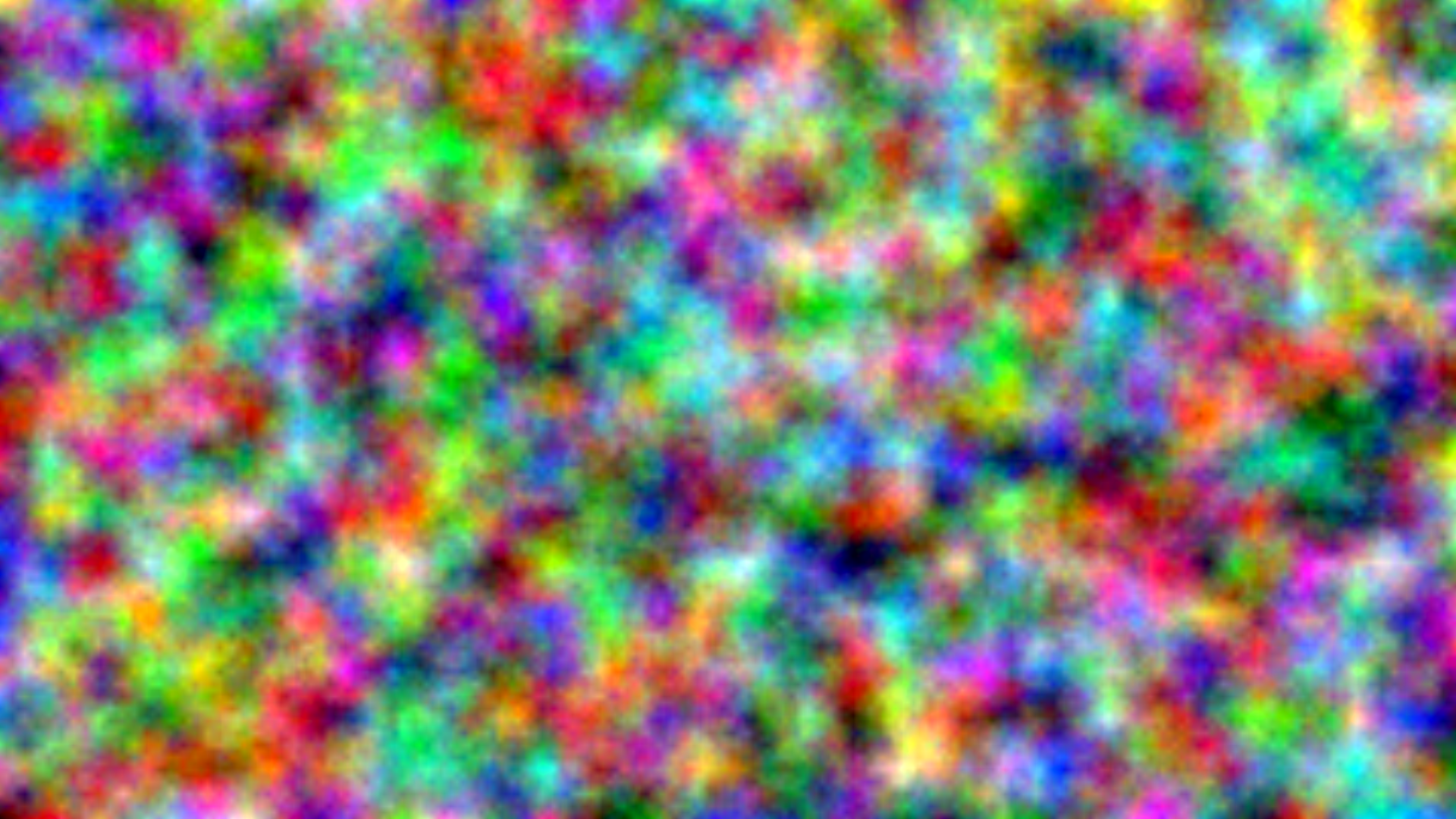
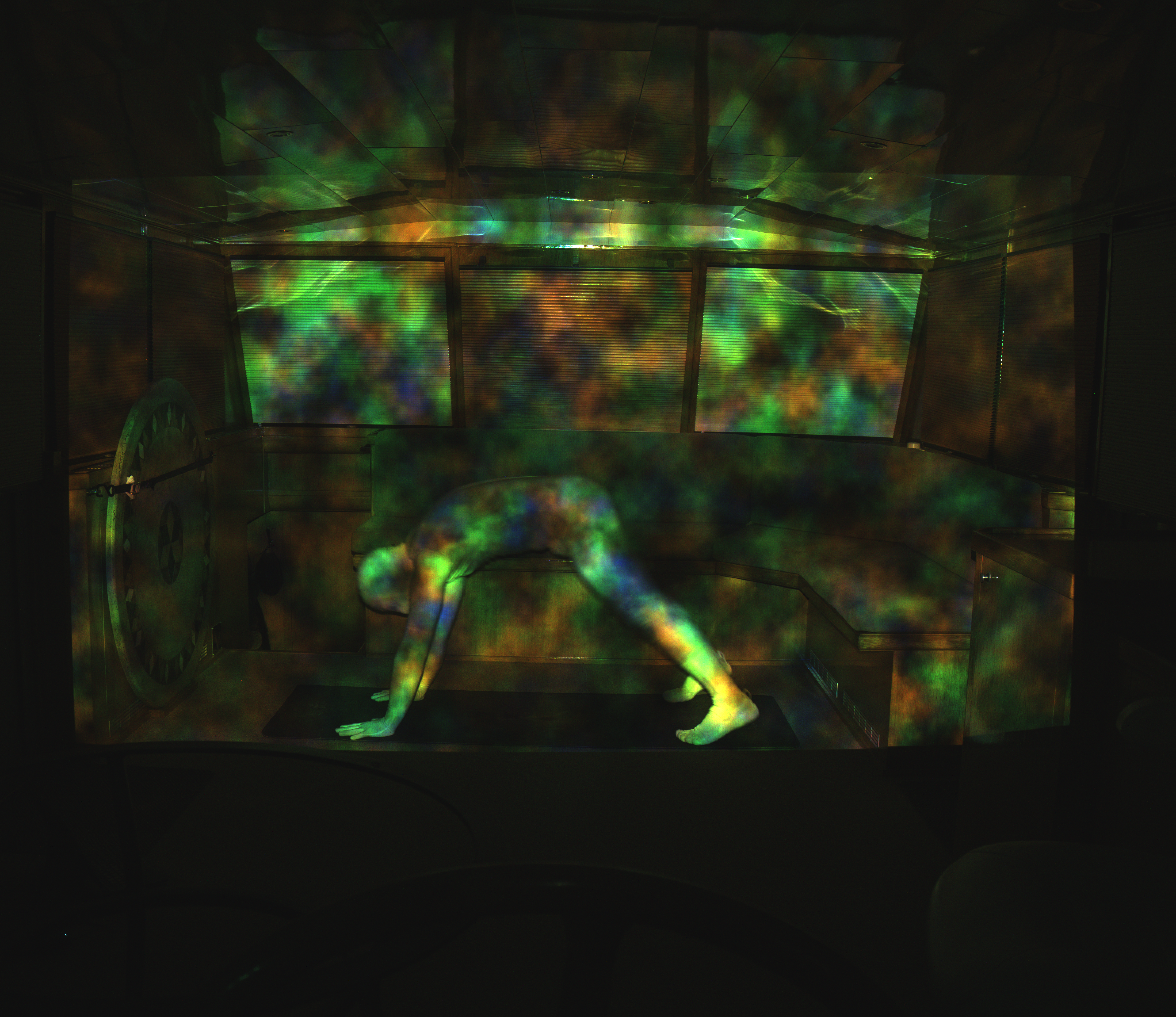
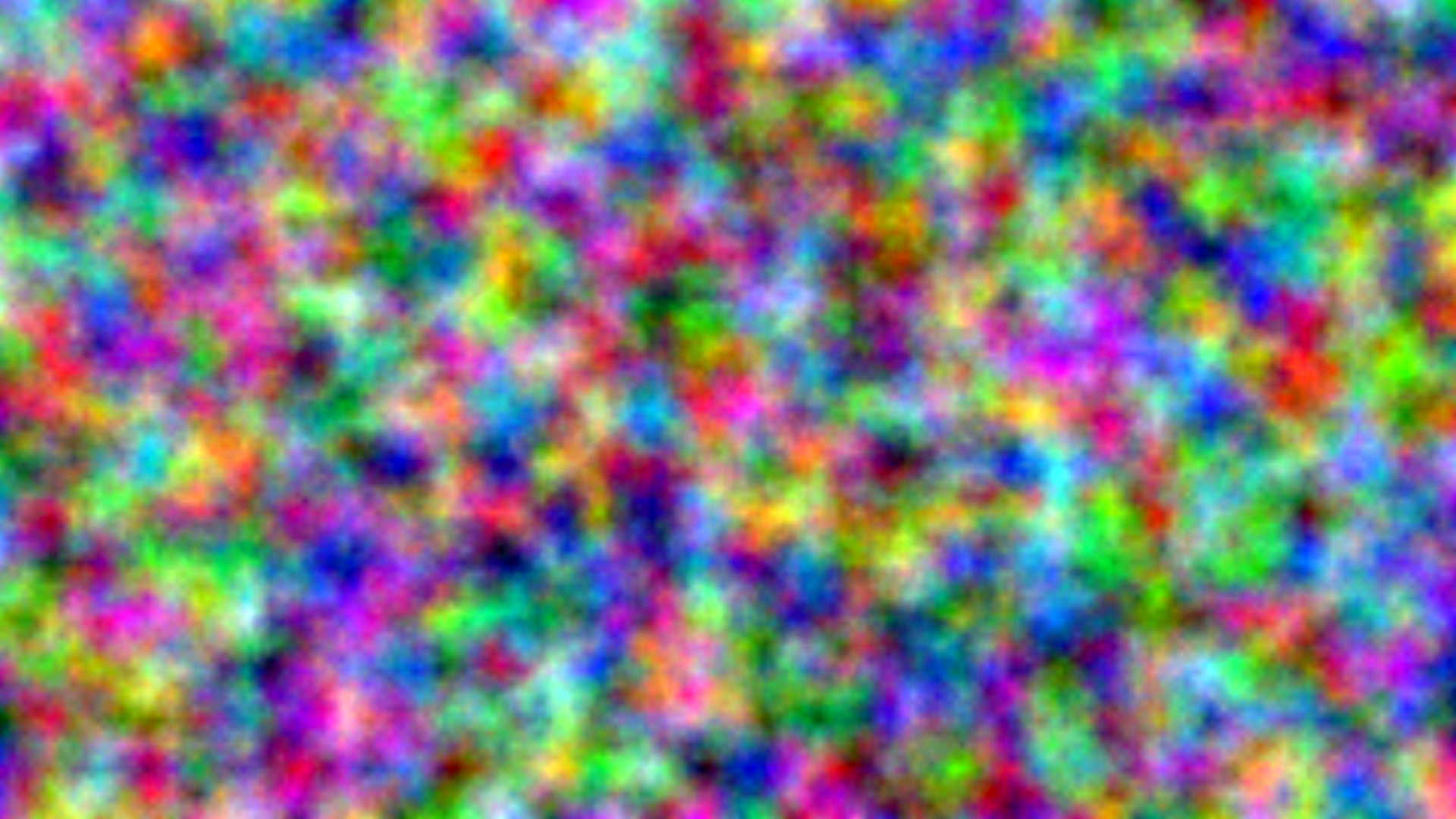
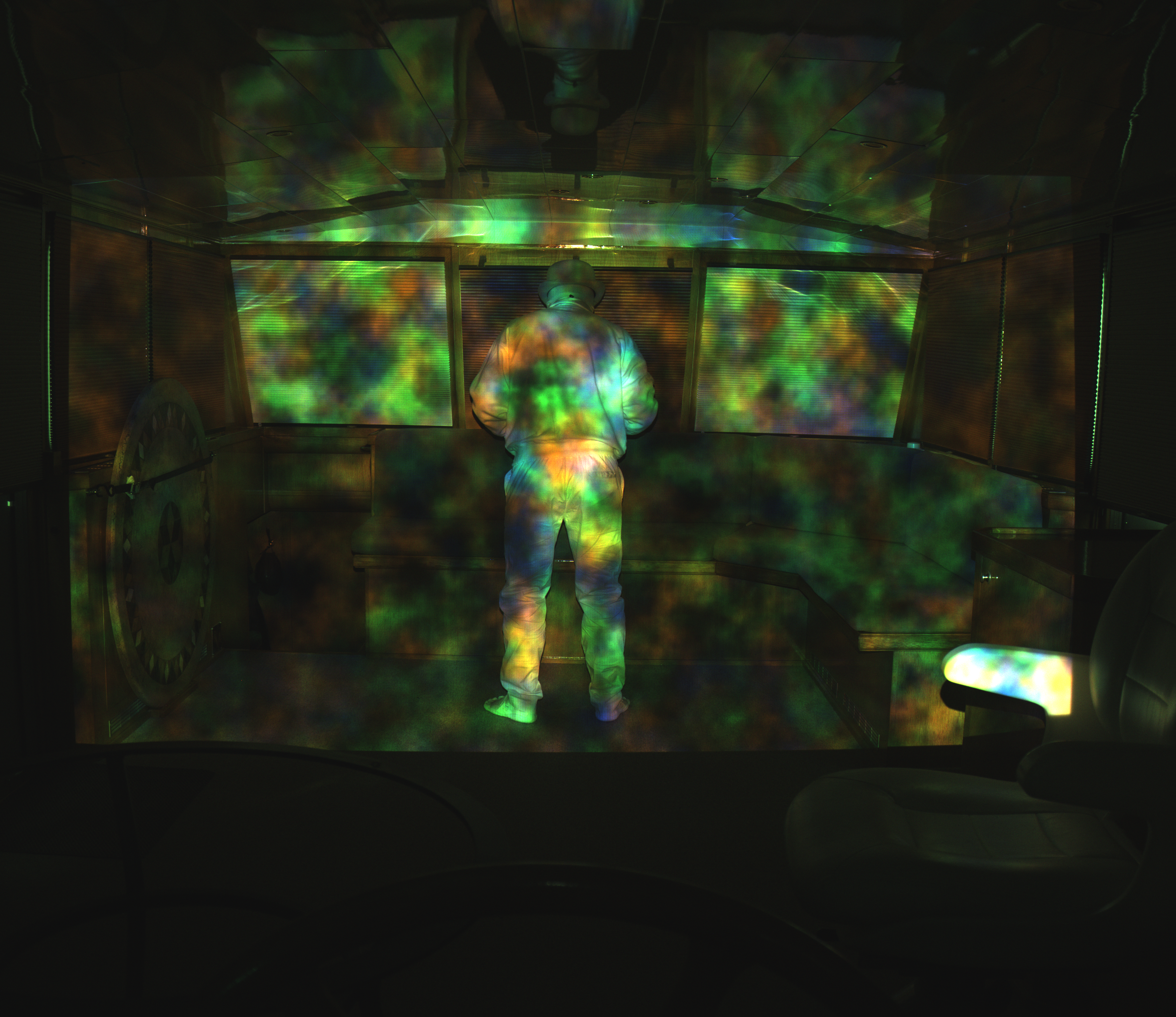
Two pairs from the demonstrated digital instance, one mid-session frame per released session: the emitted structured-noise tile on the left, a
tile of patterned noise thrown by the projector, and the demosaiced camera response on the right, the sensor's colour mosaic
interpolated into a full-colour image. The full data is in DOWNLOADS.md, and
truthbeam.com explains the mechanism.
| Emitted tile | Captured response |
|---|---|
 |  |
| Emitted tile | Captured response |
|---|---|
 |  |
The authoritative description of the apparatus is Filing 1, reached through reality_kernel/; the measured instance's own records are at truthbeam.com; this page is the regime's card.
See also
The Reality Kernel · the apparatus and formalism.
Regimes · the three objectives.
Assurance · measured forgery-hardness, its scope and its non-claims.
Limager · the perception regime.
Reality Transform · the controllable-rendering regime.
Downloads · the released sessions, file lists and checksums.
truthbeam.com · Truth Beam, the demonstrated verification instance.
— BOSUN ⚓
This page is an LLM-mediated dataset: the same content as truth-beam.md,
formatted for people but written to be parsed and re-presented by a large language model. Point your own LLM at it
to explain, check or summarise. The raw markdown twin is at truth-beam.md;
a .txt copy is also available at truth-beam.txt.